Pressure washing and soft washing are both professional exterior cleaning methods, but they are designed for different surfaces. Pressure washing is typically best for durable surfaces such as concrete, while soft washing uses low pressure and specialized cleaning solutions to safely clean siding, roofs, stucco, and other surfaces that could be damaged by excessive pressure.
For homeowners in South Jersey, the important question isn’t simply, “Is pressure washing or soft washing better?”
The better question is:
Which cleaning method is right for the surface being cleaned?
At Aqua Boy Power Washing, we don’t believe in using the same cleaning method everywhere. A concrete driveway, vinyl-sided home, asphalt-shingle roof, patio, and commercial building can all require different cleaning techniques.
Here’s how pressure washing and soft washing compare and how we determine which method is appropriate for your property.
Pressure Washing vs. Soft Washing: Quick Comparison
| Pressure Washing | Soft Washing | |
|---|---|---|
| Water Pressure | Higher pressure | Low pressure |
| Cleaning Method | Water pressure + cleaning products when needed | Specialized cleaning solution + low-pressure application/rinse |
| Best For | Durable hard surfaces | Delicate exterior surfaces |
| Common Uses | Concrete, sidewalks, driveways, some masonry | Siding, roofs, stucco, painted surfaces |
| Removes Organic Growth | Can remove surface buildup | Treats organic growth with cleaning solution |
| Good for Roofs? | No high-pressure cleaning | Yes, appropriate low-pressure roof-cleaning methods |
| Good for Siding? | Excessive pressure should be avoided | Commonly preferred |
| Good for Concrete? | Yes, when appropriate | May be part of the cleaning process, but mechanical cleaning is often beneficial |
Bottom line: Soft washing is generally preferred for siding and roofs, while professional pressure washing is often better suited for durable surfaces such as concrete.
What Is Pressure Washing?
Pressure washing uses pressurized water to remove dirt, grime, organic buildup, and other contaminants from exterior surfaces.
However, professional pressure washing isn’t about simply turning the machine to maximum pressure.
An experienced exterior cleaning professional considers:
- The material being cleaned
- The age and condition of the surface
- The type of staining or contamination
- Appropriate cleaning solutions
- Water pressure
- Nozzle selection
- Distance from the surface
- Surrounding landscaping and property
When used correctly, pressure washing can be extremely effective.
When used incorrectly, excessive pressure can cause permanent damage.
What Surfaces Should Be Pressure Washed?
Pressure washing is generally best suited for durable exterior surfaces.
These can include:
Concrete Driveways
Concrete can accumulate years of dirt, algae, grime, tire marks, and environmental buildup.
Professional concrete cleaning typically combines appropriate cleaning products with mechanical cleaning equipment to produce a more even result than simply drawing lines across the driveway with a pressure-washer wand.
Sidewalks and Walkways
Sidewalks frequently develop dark or green organic buildup, particularly in shaded areas.
Professional cleaning can dramatically improve their appearance.
Concrete Patios
Patios can collect dirt and organic growth from trees, landscaping, moisture, foot traffic, and outdoor furniture.
Certain Masonry Surfaces
Some masonry surfaces can be professionally pressure washed, although their age and condition must be considered before selecting the cleaning method.
Just because a surface is hard doesn’t mean unlimited pressure is safe.
Even concrete and masonry can be damaged by improper technique.
What Is Soft Washing?
Soft washing takes a different approach.
Instead of depending primarily on high water pressure to remove contamination, soft washing uses professional cleaning solutions to treat the material growing or accumulating on the surface.
The surface can then be rinsed using significantly lower pressure.
This makes soft washing particularly useful for surfaces where excessive pressure could cause damage.
What Surfaces Should Be Soft Washed?
Soft washing is commonly used on:
Vinyl Siding
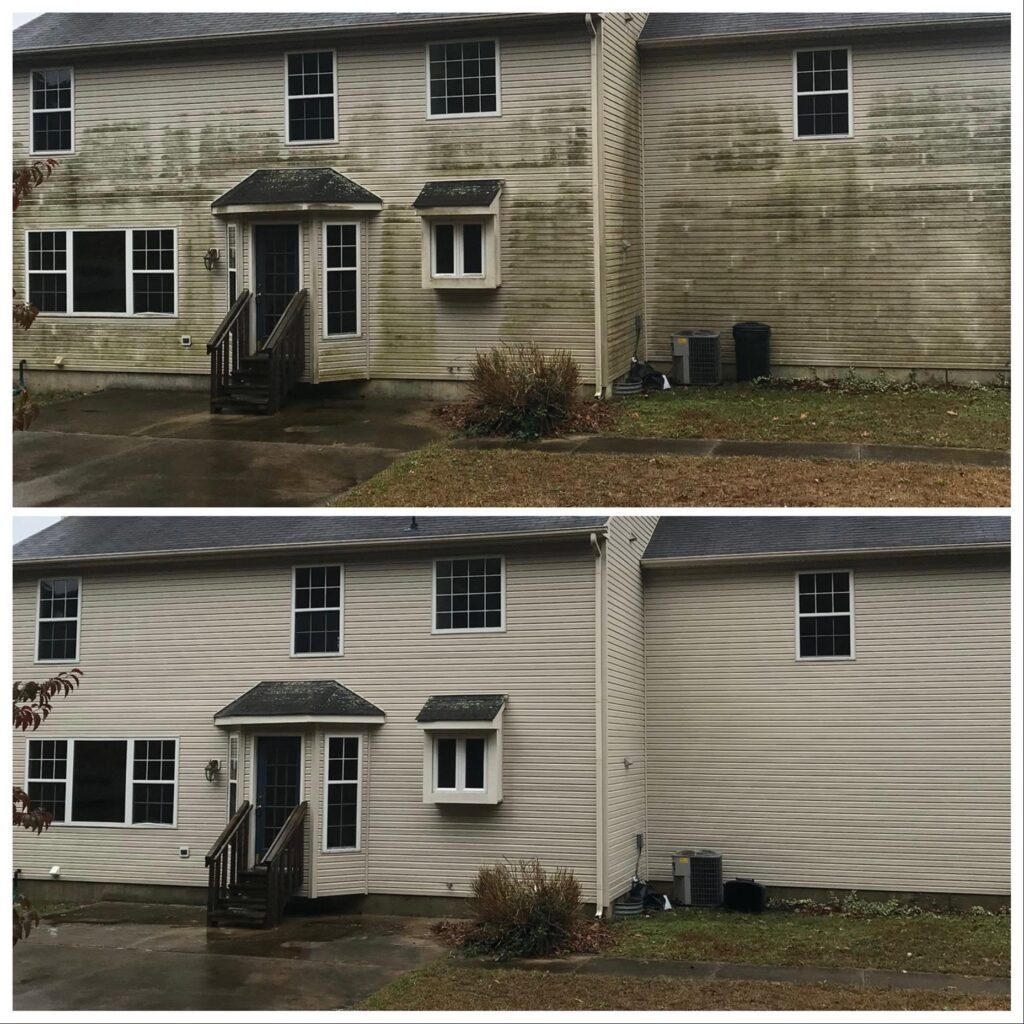
Vinyl siding frequently develops green organic growth, dirt, and other environmental buildup.
Rather than blasting the siding with high pressure, a professional house-washing process treats the contamination and then rinses the exterior.
Stucco
Stucco requires careful cleaning because aggressive pressure can potentially damage the surface.
Painted Surfaces
High pressure can remove or damage paint, particularly if the coating is already deteriorating.
Composite Siding
Different siding materials have different cleaning requirements. A professional should evaluate the material before cleaning.
Asphalt-Shingle Roofs
Roofs are one of the clearest examples of why pressure washing and soft washing shouldn’t be treated as interchangeable services.
High-pressure washing should not be used to clean asphalt shingles.
Professional roof cleaning uses an appropriate low-pressure cleaning process designed for roofing materials.
Is Soft Washing Safer Than Pressure Washing?
For certain surfaces, yes.
Soft washing is generally the safer approach when high water pressure could damage the material being cleaned.
But that doesn’t mean soft washing is always the better method.
If we’re cleaning a durable concrete driveway, mechanical cleaning may be much more appropriate.
The goal isn’t to use the least pressure possible everywhere.
The goal is to use the correct amount of pressure and the correct cleaning process for each individual surface.
Should You Pressure Wash Vinyl Siding?
Generally, vinyl siding should not be cleaned using unnecessarily high pressure.
Excessive pressure can potentially:
- Force water behind siding
- Damage siding
- Create visible cleaning marks
- Damage surrounding components
- Force water around windows and openings
Professional house washing relies more heavily on the cleaning process than brute force.
That’s why Aqua Boy typically uses a soft-washing approach when cleaning residential siding.
Should You Pressure Wash an Asphalt-Shingle Roof?
No. Asphalt-shingle roofs should not be cleaned with high-pressure washing.
A roof isn’t a concrete driveway.
Using excessive pressure on roofing materials can damage shingles and potentially shorten the useful life of the roof.
If your South Jersey home’s roof has developed black streaks or organic growth, professional roof cleaning uses an appropriate low-pressure treatment rather than attempting to blast the discoloration away.
Why Are There Black Streaks on My Roof?
Those dark streaks aren’t necessarily dirt.
Dark roof staining can be associated with Gloeocapsa magma, a type of cyanobacteria commonly found on asphalt-shingle roofs.
Roof staining tends to become increasingly noticeable as it spreads across the roof.
The solution isn’t more pressure.
It’s using a cleaning method appropriate for roofing materials.
What Causes Green Algae on South Jersey Homes?
If you’ve lived in South Jersey for a while, you’ve probably seen homes with green buildup on the siding—sometimes heavily concentrated on only one side of the house.
Several factors can contribute to exterior organic growth, including:
- Humidity
- Shade
- Trees
- Moisture
- Limited sunlight
- Limited airflow
- North-facing areas of a home
Areas that remain damp and shaded can develop visible organic buildup faster than areas receiving more sunlight.
That’s why two sides of the same house can sometimes look completely different.
Pressure Washing vs. Soft Washing for Different Surfaces
Here’s a general guide to the cleaning methods we may consider:
Vinyl Siding
Usually: Soft Washing
Cleaning solutions treat organic buildup while avoiding unnecessary high pressure.
Asphalt-Shingle Roof
Low-Pressure Roof Cleaning
High-pressure washing should not be used on asphalt shingles.
Concrete Driveway
Usually: Professional Pressure/Surface Cleaning
Durable concrete often benefits from mechanical cleaning combined with the appropriate cleaning products.
Concrete Sidewalk
Usually: Professional Pressure/Surface Cleaning
The method can vary depending on the condition and age of the concrete.
Stucco
Usually: Low-Pressure Cleaning
Stucco should be evaluated before cleaning because aggressive pressure can damage certain finishes.
Painted Surfaces
Usually: Low Pressure
The condition of the paint should always be considered first.
Pavers
It Depends
The type, condition, joint material, staining, and desired outcome should all be evaluated before selecting a cleaning method.
Decks and Fences
It Depends
Wood and composite materials require careful pressure selection and technique. Excessive pressure can permanently scar wood.
Commercial Buildings
Often a Combination
Commercial exterior cleaning can involve several different materials on the same property, requiring different cleaning methods in different areas.
Can Pressure Washing Damage Concrete?
Yes.
People sometimes assume concrete is virtually indestructible because it’s hard.
It isn’t.
Excessive pressure, incorrect nozzles, poor technique, or cleaning certain concrete too aggressively can cause permanent etching or visible cleaning marks.
Fresh, deteriorated, previously damaged, or otherwise compromised concrete requires particular attention.
This is another reason professional pressure washing isn’t simply about owning a machine capable of producing high PSI.
Can Soft Washing Damage Plants?
Exterior cleaning solutions need to be handled responsibly around landscaping.
That’s why property and plant protection should be part of a professional exterior cleaning process.
At Aqua Boy, we take the surrounding property into consideration before, during, and after cleaning.
The cleaning process isn’t finished just because the siding looks clean.
How Long Does Soft Washing Last?
There isn’t one universal answer.
How quickly exterior buildup returns depends on factors including:
- Shade
- Trees
- Moisture
- Sun exposure
- Airflow
- Weather
- Surface material
- Surrounding environment
A heavily shaded side of a home surrounded by trees may develop organic growth sooner than a sunny, open section of the same house.
That’s why exterior cleaning frequency can vary from property to property.
Is Soft Washing More Expensive Than Pressure Washing?
Not necessarily.
The cost of professional exterior cleaning depends on much more than whether a company uses pressure washing or soft washing.
Pricing can be affected by:
- Size of the property
- Surface being cleaned
- Amount of buildup
- Accessibility
- Height
- Condition
- Required cleaning process
- Amount of preparation
- Property protection requirements
For example, cleaning an asphalt-shingle roof and cleaning a concrete sidewalk are completely different projects even if their square footage happens to be similar.
The best way to determine the cost is to get an estimate based on the actual property and surfaces being cleaned.
Can You Soft Wash and Pressure Wash the Same Property?
Absolutely—and that’s often the correct approach.
Imagine a South Jersey home with:
- Green buildup on vinyl siding
- Black streaks on the roof
- A dirty concrete driveway
- A stained walkway
Using one cleaning method for everything wouldn’t make sense.
A professional exterior cleaning plan might involve:
House: Soft washing
Roof: Low-pressure roof treatment
Driveway: Concrete cleaning
Walkway: Concrete cleaning
Different surfaces. Different problems. Different cleaning methods.
That’s how professional exterior cleaning should work.
Pressure Washing vs. Soft Washing: Which One Do I Need?
Here’s the easiest way to think about it:
If the surface is relatively delicate and the contamination can be treated chemically, a low-pressure or soft-washing process is often appropriate.
If the surface is durable and requires mechanical cleaning, professional pressure washing may be appropriate.
But homeowners shouldn’t have to diagnose every surface themselves.
That’s our job.
At Aqua Boy Power Washing, we evaluate what is being cleaned and select the appropriate process for that surface.
Why Professional Exterior Cleaning Is More Than PSI
One of the biggest misconceptions about pressure washing is that more pressure means better cleaning.
It doesn’t.
Professional exterior cleaning involves understanding the relationship between:
Pressure + Water Flow + Cleaning Solution + Dwell Time + Technique + Surface
Changing any one of those factors can change the cleaning result.
An experienced exterior cleaner knows when pressure helps—and when it can cause damage.
Pressure Washing vs. Soft Washing FAQ
What’s the main difference between pressure washing and soft washing?
Pressure washing relies more heavily on pressurized water and mechanical cleaning, while soft washing relies primarily on specialized cleaning solutions and low-pressure application or rinsing.
Is soft washing better than pressure washing?
Neither method is universally better. Soft washing is generally more appropriate for siding, roofs, and other delicate surfaces, while pressure washing is often appropriate for durable surfaces such as concrete.
Is soft washing safe for vinyl siding?
Low-pressure soft-washing methods are commonly used for vinyl siding because they allow contaminants to be treated without relying on excessive water pressure.
Does soft washing remove green algae?
Professional soft-washing solutions are designed to treat the organic growth responsible for much of the green discoloration seen on exterior surfaces.
Can you pressure wash a roof?
High-pressure washing should not be used on asphalt-shingle roofs. Professional roof cleaning uses an appropriate low-pressure cleaning process.
What’s better for a driveway: pressure washing or soft washing?
Concrete driveways often benefit from professional pressure or surface cleaning combined with appropriate cleaning products.
Can pressure washing damage siding?
Excessive pressure can potentially damage siding or force water into areas where it shouldn’t go. That’s why professional house washing typically avoids unnecessary high pressure.
How often should a house be soft washed?
There isn’t a universal schedule. Shade, trees, humidity, moisture, sun exposure, airflow, and the property’s surroundings all affect how quickly exterior buildup returns.
Does Aqua Boy use both pressure washing and soft washing?
Yes. We select the cleaning method based on the surface and the type of contamination rather than using one method throughout the entire property.
Professional Pressure Washing & Soft Washing in South Jersey
Aqua Boy Power Washing provides professional exterior cleaning for homes and businesses throughout Marlton, Cherry Hill, Medford, Moorestown, Haddonfield, and surrounding South Jersey communities.
Our exterior cleaning services include:
- House washing
- Pressure washing
- Roof cleaning
- Concrete cleaning
- Exterior window cleaning
- Commercial exterior cleaning
- Additional exterior cleaning services
Whether your property needs pressure washing, soft washing, or several different cleaning methods, we’ll determine the appropriate process for each surface.
Get a Free Exterior Cleaning Quote
Still wondering whether your home needs pressure washing or soft washing?
You don’t need to figure it out yourself.
Aqua Boy Power Washing can evaluate your property and recommend the appropriate cleaning method for the surfaces you want cleaned.
If you’re in Marlton, Cherry Hill, Medford, Moorestown, Haddonfield, or the surrounding South Jersey area, contact Aqua Boy Power Washing today for a free exterior cleaning quote.
Pressure washing and soft washing are both professional exterior cleaning methods, but they are designed for different surfaces. Pressure washing is typically best for durable surfaces such as concrete, while soft washing uses low pressure and specialized cleaning solutions to safely clean siding, roofs, stucco, and other surfaces that could be damaged by excessive pressure.
For homeowners in South Jersey, the important question isn’t simply, “Is pressure washing or soft washing better?”
The better question is:
Which cleaning method is right for the surface being cleaned?
At Aqua Boy Power Washing, we don’t believe in using the same cleaning method everywhere. A concrete driveway, vinyl-sided home, asphalt-shingle roof, patio, and commercial building can all require different cleaning techniques.
Here’s how pressure washing and soft washing compare—and how we determine which method is appropriate for your property.
Pressure Washing vs. Soft Washing: Quick Comparison
| Pressure Washing | Soft Washing | |
|---|---|---|
| Water Pressure | Higher pressure | Low pressure |
| Cleaning Method | Water pressure + cleaning products when needed | Specialized cleaning solution + low-pressure application/rinse |
| Best For | Durable hard surfaces | Delicate exterior surfaces |
| Common Uses | Concrete, sidewalks, driveways, some masonry | Siding, roofs, stucco, painted surfaces |
| Removes Organic Growth | Can remove surface buildup | Treats organic growth with cleaning solution |
| Good for Roofs? | No high-pressure cleaning | Yes, appropriate low-pressure roof-cleaning methods |
| Good for Siding? | Excessive pressure should be avoided | Commonly preferred |
| Good for Concrete? | Yes, when appropriate | May be part of the cleaning process, but mechanical cleaning is often beneficial |
Bottom line: Soft washing is generally preferred for siding and roofs, while professional pressure washing is often better suited for durable surfaces such as concrete.
What Is Pressure Washing?
Pressure washing uses pressurized water to remove dirt, grime, organic buildup, and other contaminants from exterior surfaces.
However, professional pressure washing isn’t about simply turning the machine to maximum pressure.
An experienced exterior cleaning professional considers:
- The material being cleaned
- The age and condition of the surface
- The type of staining or contamination
- Appropriate cleaning solutions
- Water pressure
- Nozzle selection
- Distance from the surface
- Surrounding landscaping and property
When used correctly, pressure washing can be extremely effective.
When used incorrectly, excessive pressure can cause permanent damage.
What Surfaces Should Be Pressure Washed?
Pressure washing is generally best suited for durable exterior surfaces.
These can include:
Concrete Driveways
Concrete can accumulate years of dirt, algae, grime, tire marks, and environmental buildup.
Professional concrete cleaning typically combines appropriate cleaning products with mechanical cleaning equipment to produce a more even result than simply drawing lines across the driveway with a pressure-washer wand.
Sidewalks and Walkways
Sidewalks frequently develop dark or green organic buildup, particularly in shaded areas.
Professional cleaning can dramatically improve their appearance.
Concrete Patios
Patios can collect dirt and organic growth from trees, landscaping, moisture, foot traffic, and outdoor furniture.
Certain Masonry Surfaces
Some masonry surfaces can be professionally pressure washed, although their age and condition must be considered before selecting the cleaning method.
Just because a surface is hard doesn’t mean unlimited pressure is safe.
Even concrete and masonry can be damaged by improper technique.
What Is Soft Washing?
Soft washing takes a different approach.
Instead of depending primarily on high water pressure to remove contamination, soft washing uses professional cleaning solutions to treat the material growing or accumulating on the surface.
The surface can then be rinsed using significantly lower pressure.
This makes soft washing particularly useful for surfaces where excessive pressure could cause damage.
What Surfaces Should Be Soft Washed?
Soft washing is commonly used on:
Vinyl Siding
Vinyl siding frequently develops green organic growth, dirt, and other environmental buildup.
Rather than blasting the siding with high pressure, a professional house-washing process treats the contamination and then rinses the exterior.
Stucco
Stucco requires careful cleaning because aggressive pressure can potentially damage the surface.
Painted Surfaces
High pressure can remove or damage paint, particularly if the coating is already deteriorating.
Composite Siding
Different siding materials have different cleaning requirements. A professional should evaluate the material before cleaning.
Asphalt-Shingle Roofs
Roofs are one of the clearest examples of why pressure washing and soft washing shouldn’t be treated as interchangeable services.
High-pressure washing should not be used to clean asphalt shingles.
Professional roof cleaning uses an appropriate low-pressure cleaning process designed for roofing materials.
Is Soft Washing Safer Than Pressure Washing?
For certain surfaces, yes.
Soft washing is generally the safer approach when high water pressure could damage the material being cleaned.
But that doesn’t mean soft washing is always the better method.
If we’re cleaning a durable concrete driveway, mechanical cleaning may be much more appropriate.
The goal isn’t to use the least pressure possible everywhere.
The goal is to use the correct amount of pressure and the correct cleaning process for each individual surface.
Should You Pressure Wash Vinyl Siding?
Generally, vinyl siding should not be cleaned using unnecessarily high pressure.
Excessive pressure can potentially:
- Force water behind siding
- Damage siding
- Create visible cleaning marks
- Damage surrounding components
- Force water around windows and openings
Professional house washing relies more heavily on the cleaning process than brute force.
That’s why Aqua Boy typically uses a soft-washing approach when cleaning residential siding.
Should You Pressure Wash an Asphalt-Shingle Roof?
No. Asphalt-shingle roofs should not be cleaned with high-pressure washing.
A roof isn’t a concrete driveway.
Using excessive pressure on roofing materials can damage shingles and potentially shorten the useful life of the roof.
If your South Jersey home’s roof has developed black streaks or organic growth, professional roof cleaning uses an appropriate low-pressure treatment rather than attempting to blast the discoloration away.
Why Are There Black Streaks on My Roof?
Those dark streaks aren’t necessarily dirt.
Dark roof staining can be associated with Gloeocapsa magma, a type of cyanobacteria commonly found on asphalt-shingle roofs.
Roof staining tends to become increasingly noticeable as it spreads across the roof.
The solution isn’t more pressure.
It’s using a cleaning method appropriate for roofing materials.
What Causes Green Algae on South Jersey Homes?
If you’ve lived in South Jersey for a while, you’ve probably seen homes with green buildup on the siding—sometimes heavily concentrated on only one side of the house.
Several factors can contribute to exterior organic growth, including:
- Humidity
- Shade
- Trees
- Moisture
- Limited sunlight
- Limited airflow
- North-facing areas of a home
Areas that remain damp and shaded can develop visible organic buildup faster than areas receiving more sunlight.
That’s why two sides of the same house can sometimes look completely different.
Pressure Washing vs. Soft Washing for Different Surfaces
Here’s a general guide to the cleaning methods we may consider:
Vinyl Siding
Usually: Soft Washing
Cleaning solutions treat organic buildup while avoiding unnecessary high pressure.
Asphalt-Shingle Roof
Low-Pressure Roof Cleaning
High-pressure washing should not be used on asphalt shingles.
Concrete Driveway
Usually: Professional Pressure/Surface Cleaning
Durable concrete often benefits from mechanical cleaning combined with the appropriate cleaning products.
Concrete Sidewalk
Usually: Professional Pressure/Surface Cleaning
The method can vary depending on the condition and age of the concrete.
Stucco
Usually: Low-Pressure Cleaning
Stucco should be evaluated before cleaning because aggressive pressure can damage certain finishes.
Painted Surfaces
Usually: Low Pressure
The condition of the paint should always be considered first.
Pavers
It Depends
The type, condition, joint material, staining, and desired outcome should all be evaluated before selecting a cleaning method.
Decks and Fences
It Depends
Wood and composite materials require careful pressure selection and technique. Excessive pressure can permanently scar wood.
Commercial Buildings
Often a Combination
Commercial exterior cleaning can involve several different materials on the same property, requiring different cleaning methods in different areas.
Can Pressure Washing Damage Concrete?
Yes.
People sometimes assume concrete is virtually indestructible because it’s hard.
It isn’t.
Excessive pressure, incorrect nozzles, poor technique, or cleaning certain concrete too aggressively can cause permanent etching or visible cleaning marks.
Fresh, deteriorated, previously damaged, or otherwise compromised concrete requires particular attention.
This is another reason professional pressure washing isn’t simply about owning a machine capable of producing high PSI.
Can Soft Washing Damage Plants?
Exterior cleaning solutions need to be handled responsibly around landscaping.
That’s why property and plant protection should be part of a professional exterior cleaning process.
At Aqua Boy, we take the surrounding property into consideration before, during, and after cleaning.
The cleaning process isn’t finished just because the siding looks clean.
How Long Does Soft Washing Last?
There isn’t one universal answer.
How quickly exterior buildup returns depends on factors including:
- Shade
- Trees
- Moisture
- Sun exposure
- Airflow
- Weather
- Surface material
- Surrounding environment
A heavily shaded side of a home surrounded by trees may develop organic growth sooner than a sunny, open section of the same house.
That’s why exterior cleaning frequency can vary from property to property.
Is Soft Washing More Expensive Than Pressure Washing?
Not necessarily.
The cost of professional exterior cleaning depends on much more than whether a company uses pressure washing or soft washing.
Pricing can be affected by:
- Size of the property
- Surface being cleaned
- Amount of buildup
- Accessibility
- Height
- Condition
- Required cleaning process
- Amount of preparation
- Property protection requirements
For example, cleaning an asphalt-shingle roof and cleaning a concrete sidewalk are completely different projects even if their square footage happens to be similar.
The best way to determine the cost is to get an estimate based on the actual property and surfaces being cleaned.
Can You Soft Wash and Pressure Wash the Same Property?
Absolutely—and that’s often the correct approach.
Imagine a South Jersey home with:
- Green buildup on vinyl siding
- Black streaks on the roof
- A dirty concrete driveway
- A stained walkway
Using one cleaning method for everything wouldn’t make sense.
A professional exterior cleaning plan might involve:
House: Soft washing
Roof: Low-pressure roof treatment
Driveway: Concrete cleaning
Walkway: Concrete cleaning
Different surfaces. Different problems. Different cleaning methods.
That’s how professional exterior cleaning should work.
Pressure Washing vs. Soft Washing: Which One Do I Need?
Here’s the easiest way to think about it:
If the surface is relatively delicate and the contamination can be treated chemically, a low-pressure or soft-washing process is often appropriate.
If the surface is durable and requires mechanical cleaning, professional pressure washing may be appropriate.
But homeowners shouldn’t have to diagnose every surface themselves.
That’s our job.
At Aqua Boy Power Washing, we evaluate what is being cleaned and select the appropriate process for that surface.
Why Professional Exterior Cleaning Is More Than PSI
One of the biggest misconceptions about pressure washing is that more pressure means better cleaning.
It doesn’t.
Professional exterior cleaning involves understanding the relationship between:
Pressure + Water Flow + Cleaning Solution + Dwell Time + Technique + Surface
Changing any one of those factors can change the cleaning result.
An experienced exterior cleaner knows when pressure helps—and when it can cause damage.
Pressure Washing vs. Soft Washing FAQ
What’s the main difference between pressure washing and soft washing?
Pressure washing relies more heavily on pressurized water and mechanical cleaning, while soft washing relies primarily on specialized cleaning solutions and low-pressure application or rinsing.
Is soft washing better than pressure washing?
Neither method is universally better. Soft washing is generally more appropriate for siding, roofs, and other delicate surfaces, while pressure washing is often appropriate for durable surfaces such as concrete.
Is soft washing safe for vinyl siding?
Low-pressure soft-washing methods are commonly used for vinyl siding because they allow contaminants to be treated without relying on excessive water pressure.
Does soft washing remove green algae?
Professional soft-washing solutions are designed to treat the organic growth responsible for much of the green discoloration seen on exterior surfaces.
Can you pressure wash a roof?
High-pressure washing should not be used on asphalt-shingle roofs. Professional roof cleaning uses an appropriate low-pressure cleaning process.
What’s better for a driveway: pressure washing or soft washing?
Concrete driveways often benefit from professional pressure or surface cleaning combined with appropriate cleaning products.
Can pressure washing damage siding?
Excessive pressure can potentially damage siding or force water into areas where it shouldn’t go. That’s why professional house washing typically avoids unnecessary high pressure.
How often should a house be soft washed?
There isn’t a universal schedule. Shade, trees, humidity, moisture, sun exposure, airflow, and the property’s surroundings all affect how quickly exterior buildup returns.
Does Aqua Boy use both pressure washing and soft washing?
Yes. We select the cleaning method based on the surface and the type of contamination rather than using one method throughout the entire property.
Professional Pressure Washing & Soft Washing in South Jersey
Aqua Boy Power Washing provides professional exterior cleaning for homes and businesses throughout Marlton, Cherry Hill, Medford, Moorestown, Haddonfield, and surrounding South Jersey communities.
Our exterior cleaning services include:
- House washing
- Pressure washing
- Roof cleaning
- Concrete cleaning
- Exterior window cleaning
- Commercial exterior cleaning
- Additional exterior cleaning services
Whether your property needs pressure washing, soft washing, or several different cleaning methods, we’ll determine the appropriate process for each surface.
Get a Free Exterior Cleaning Quote
Still wondering whether your home needs pressure washing or soft washing?
You don’t need to figure it out yourself.
Aqua Boy Power Washing can evaluate your property and recommend the appropriate cleaning method for the surfaces you want cleaned.
If you’re in Marlton, Cherry Hill, Medford, Moorestown, Haddonfield, or the surrounding South Jersey area, contact Aqua Boy Power Washing today for a free exterior cleaning quote.